.jpg)
Bees Are Shaping The Future Of AI
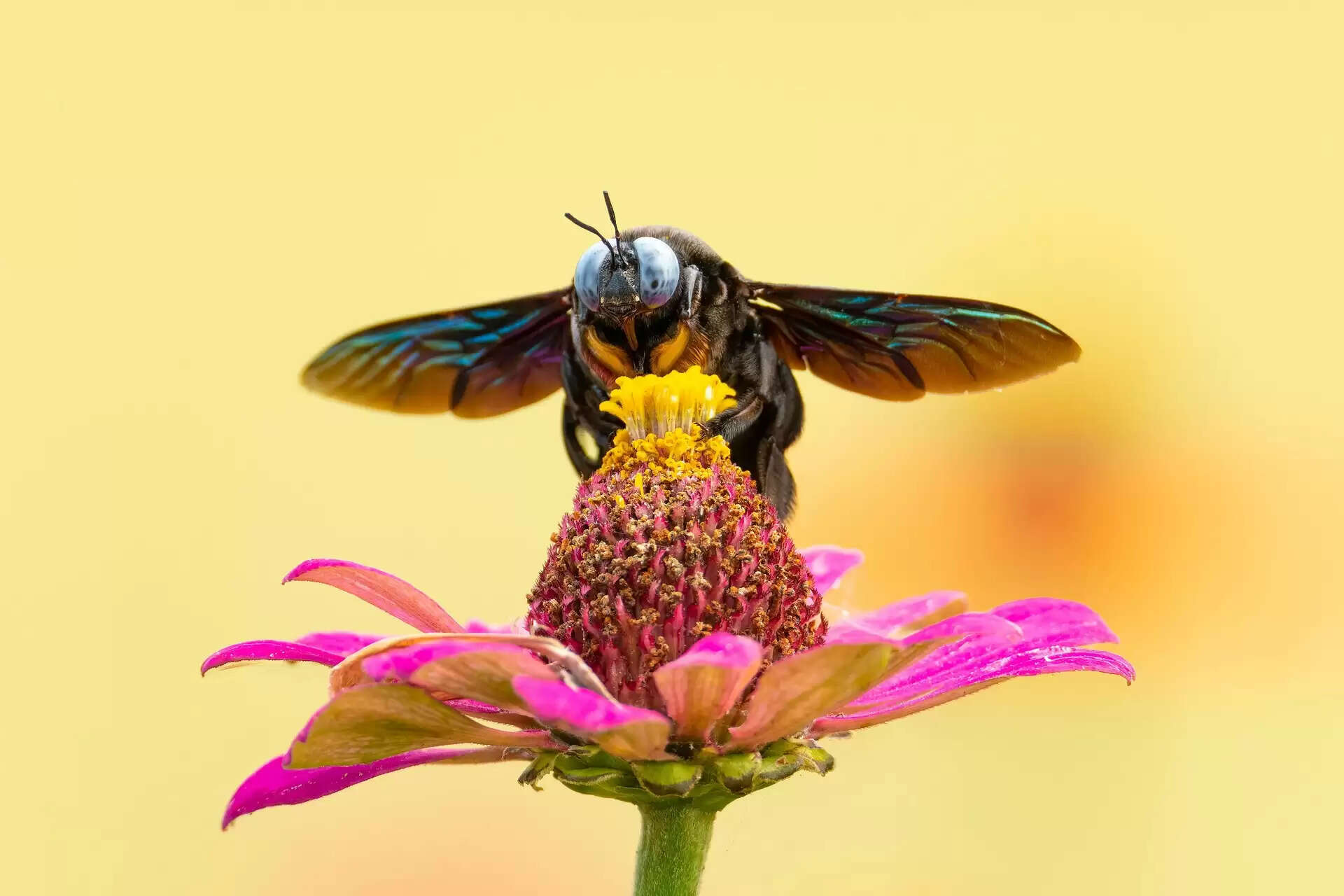
Bees may hold the secret to the next revolution in artificial intelligence. New research reveals that their flight movements enhance how they see and learn, turning motion into a tool for smarter thinking. This discovery could inspire AI systems that learn naturally — not through data overload, but through dynamic interaction and movement.
The Secret Behind a Bee’s Flight
Recent scientific insights reveal that bees do much more than simply fly from flower to flower — their movements actually help them think. These flight patterns are not random; they shape how bees perceive and understand their surroundings. By coordinating their movements in specific ways, bees create clearer brain signals, enabling them to recognize intricate shapes, colors, and visual patterns with remarkable accuracy.
Digital Recreation of a Tiny Mind
Researchers have managed to replicate this process using a digital model of a bee’s brain. This model shows how flight movements influence what bees see, turning motion into a key part of their learning system. As the bees move, their brains generate distinct neural responses that simplify visual processing, allowing them to identify familiar patterns quickly and efficiently. In simple terms, movement becomes a tool for smarter thinking.
A New Approach to Artificial Intelligence
This discovery could transform how artificial intelligence is designed. Instead of relying on vast networks of data and heavy computing power, future AI systems may learn from nature’s efficiency. By integrating movement into their perception process, machines could gather more meaningful information with less energy and complexity. This approach could lead to more adaptive robots, smarter drones, and self-learning systems that understand the world the way living creatures do.
Intelligence as a Collaboration
The findings support a profound idea: true intelligence emerges when the brain, body, and environment work together. Bees, despite their minuscule brains, actively shape what they see by moving — rather than passively absorbing data. This dynamic interaction allows them to learn, adapt, and make sense of the world in ways that far exceed what their tiny neural systems might suggest.
Learning Through Motion, Not Data Overload
The model also reveals an extraordinary level of efficiency. Bee neurons become finely tuned over time through exposure and movement, without the need for constant rewards or reinforcement. Their brains optimize performance using only a few active neurons, conserving both energy and mental resources. This principle could inspire new AI systems that learn continuously through interaction, rather than relying solely on massive datasets or reinforcement learning loops.
Tiny Brains, Powerful Lessons
Experiments with the digital bee model confirmed that mimicking real bee flight patterns enhances visual recognition. When simulated bees scanned specific parts of symbols or shapes, their accuracy improved significantly. This finding proves that perception and action are deeply connected — the way an organism moves determines how it learns and understands. Even with extremely limited neural capacity, bees demonstrate that complex recognition tasks can be solved with minimal resources.
Nature’s Design for Smarter Machines
These discoveries challenge traditional ideas about intelligence. They show that learning does not depend on brain size or computing power but on how efficiently an organism uses the information it collects. Bees, through millions of years of evolution, have mastered an elegant system where motion fuels perception and perception drives intelligence. For the next generation of AI and robotics, this natural design may offer the key to creating machines that learn not by brute force — but by moving, sensing, and adapting like nature’s most efficient flyers.
