.jpg)
Does a Melting Greenland Make the Rest of the World Hotter?
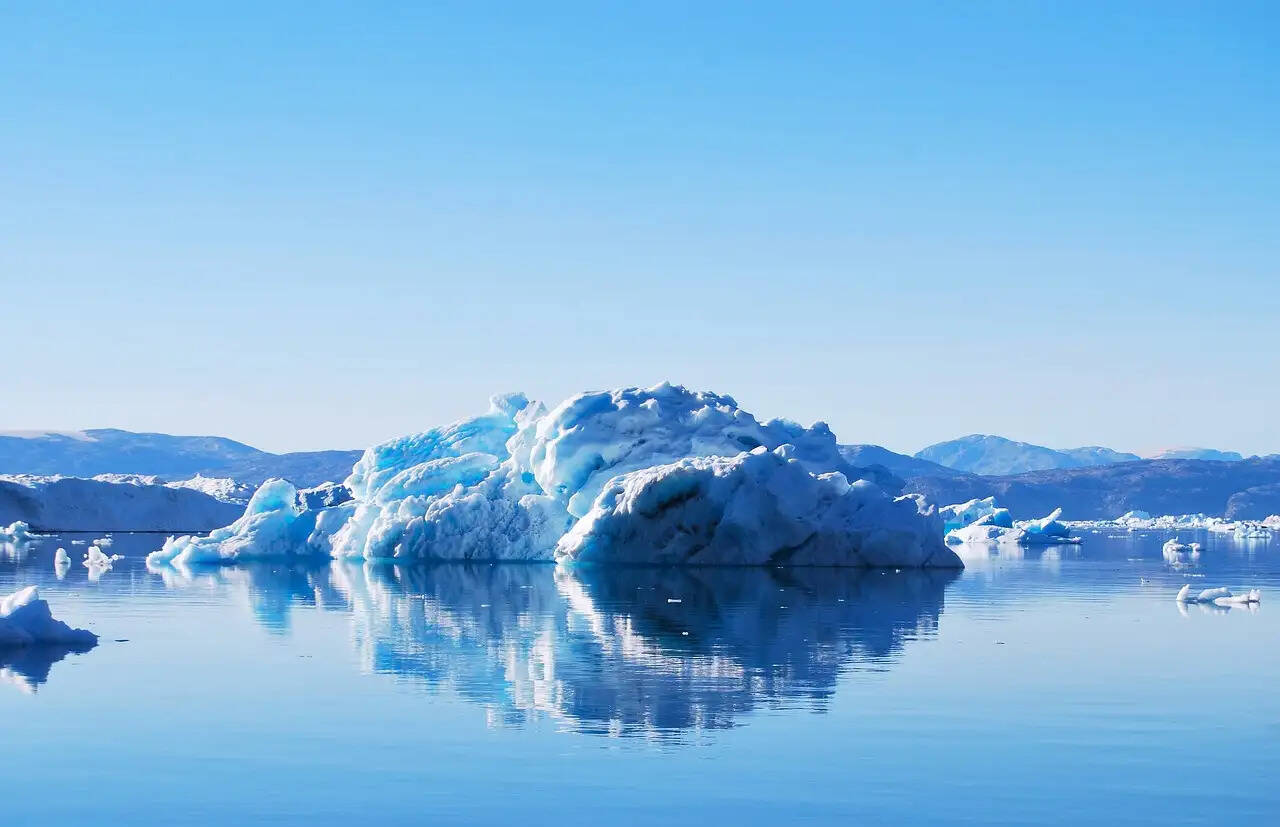
Greenland's ice sheet has been melting at a pace that's alarmed climate scientists in recent years — but does that melting actually cause hotter weather elsewhere, or is it the other way around? The honest answer is: mostly the reverse, with an important feedback loop layered on top.
The Primary Direction: Heat Causes the Melting
The clearest, most direct relationship runs from global warming to Greenland's ice loss, not the other way around.
A major 2026 study published in Nature Communications, led by researchers at the University of Barcelona, analyzed over 70 years of climate and ice data and found that extreme melting events on the Greenland Ice Sheet have intensified sharply since 1950, with seven of the ten most severe episodes occurring since 2000 alone.
Since 1990, the area affected by extreme melting has expanded by more than a million square miles per decade, and the total meltwater produced during these events has increased roughly sixfold.
Crucially, the researchers found that this isn't simply about unusual weather patterns passing over Greenland more often.
Even when atmospheric circulation patterns look similar to those decades ago, today's warmer background climate wrings out significantly more melting than the same pattern would have produced in the past — evidence that rising global temperatures themselves are the primary driver, not just short-term weather variability.
So Where Does Greenland's Ice Fit Into the Picture?
While rising temperatures are driving the melt, the melting ice isn't simply a passive symptom — it feeds back into the climate system in ways that can influence weather patterns well beyond Greenland itself.
The biggest concern centers on ocean circulation. As Greenland's ice sheet melts, it releases enormous volumes of cold freshwater into the North Atlantic. That freshwater has the potential to interfere with the Atlantic Meridional Overturning Circulation (AMOC), the vast ocean current system that helps redistribute heat around the planet, including keeping parts of Western Europe milder than their latitude would otherwise suggest.
A significantly weakened AMOC has been linked in climate models to a range of disruptive effects: potentially harsher winters in parts of Europe, shifts in tropical rainfall patterns, and changes to hurricane behavior in the Atlantic — the kind of "hotter in some places, colder or stormier in others" pattern that characterizes climate disruption more accurately than a simple uniform warming.
Melting ice also affects the Arctic more directly. As reflective ice and snow disappear, they're replaced by darker ocean water and land that absorb far more solar heat than ice does — a feedback loop scientists call the ice-albedo effect. This is a significant part of why the Arctic is now warming roughly four times faster than the global average, a phenomenon researchers have taken to calling Arctic amplification.
Does a Hotter Arctic Change Weather Further South?
This is one of the more actively debated areas in current climate research. A faster-warming Arctic has been linked by some researchers to changes in the jet stream, the fast-moving band of air that strongly influences weather across North America, Europe, and Asia.
The theory holds that a reduced temperature difference between the Arctic and mid-latitudes can cause the jet stream to weaken and become "wavier" or more erratic, potentially allowing weather systems — including heatwaves and cold snaps alike — to stall in place for longer than they otherwise would, intensifying their impact.
Scientists are careful to note that this connection remains an active area of research rather than settled consensus, since separating the jet stream effects specifically tied to Arctic warming from broader natural climate variability is genuinely difficult.
Still, it represents a credible mechanism by which conditions in Greenland and the wider Arctic could ripple outward into extreme weather patterns much further from the pole.
The Bottom Line
Greenland's melting ice isn't the root cause of hotter weather globally — that's overwhelmingly driven by the buildup of greenhouse gases warming the planet as a whole. But it isn't simply a passive casualty either.
Through freshwater disruption of ocean currents and its role in accelerating Arctic warming, Greenland's ice loss appears to actively feed back into the broader climate system, potentially amplifying weather extremes elsewhere on the planet.
In climate science, cause and effect rarely run in just one direction — and Greenland's ice sheet is a clear example of how a consequence of warming can, in turn, become part of what drives further disruption.
