
Rewinding the Cosmos: Lumina Lets Us Watch the Universe's First 2 Billion Years
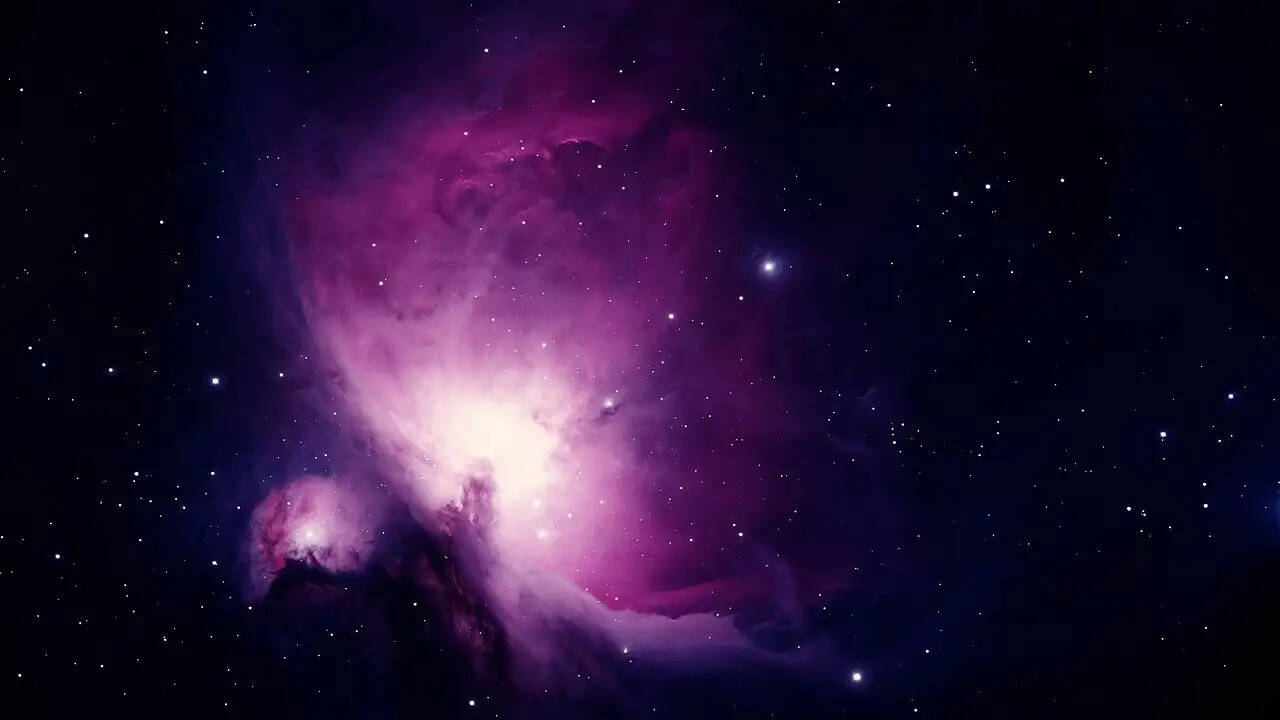
Imagine pressing rewind on the universe and watching its first 2 billion years unfold, from a dark, featureless fog to a sky blazing with the first stars, galaxies and black holes. That is exactly what a team of astronomers has now done.
Meet Lumina, a vast new computer simulation built by researchers at the Center for Astrophysics | Harvard & Smithsonian. It recreates the universe's early history on a scale no simulation of its kind has reached before.
A universe in a box
Lumina models a cube of space about 1.5 billion light-years on each side, more than 100 times the volume of earlier comparable projects. Inside it, the simulation tracks ordinary matter, invisible dark matter and radiation all at once, letting light and gas shape each other as the cosmos evolves.
Running it took serious muscle: more than 15,000 GPUs on Frontier, a supercomputer at Oak Ridge National Laboratory in the United States. The team, led by Oliver Zier, published the project in the Monthly Notices of the Royal Astronomical Society. In their technical paper, the researchers describe a model with 2 × 6,000³ resolution elements, built on the same galaxy-formation physics as the well-known IllustrisTNG simulations.
Watching the lights come on
After the Big Bang, the universe was filled with neutral gas that blocked much of the light. As the first stars and black holes switched on, their radiation stripped electrons from the atoms around them. This cosmic makeover, called reionization, slowly turned the universe transparent.
Lumina is the first simulation of its kind to follow this process for both hydrogen and helium. "For the first time, we can follow along as both hydrogen and helium changed into their modern form," said co-author Aaron Smith of the University of Texas at Dallas.
The paper's findings paint a vivid picture:
- Stars cleared the hydrogen. Hydrogen reionization was driven mainly by starlight and finished relatively late, with stubborn neutral patches lingering for a while after.
- Black holes cleared the helium. Helium's final transformation was powered by active galactic nuclei, the blazing centres of galaxies fed by supermassive black holes, and it gave the universe a late burst of heat.
- The cosmic web takes shape. The simulation reveals dark matter filaments and fast-moving gas threading between growing clusters of galaxies.
Why it matters
The James Webb Space Telescope has been spotting galaxies and black holes in the early universe that are brighter and more mature than many theories predicted. That puzzle is exactly why simulations like Lumina matter. Lead author Oliver Zier says the Webb era has made the early universe "an exciting new frontier in astrophysics."
Lumina's predictions can now be compared directly with observations from Webb and NASA's upcoming Nancy Grace Roman Space Telescope. Where reality and simulation agree, our theories grow stronger. Where they clash, scientists may be looking at clues to new physics.
The takeaway
We cannot travel back 13 billion years, but Lumina brings us closer than ever to seeing how the universe first lit up. As telescopes peer deeper into cosmic history, simulations like this will be the map that helps us read what they find.
