.jpg)
What Is the Copenhagen Plank Exercise?
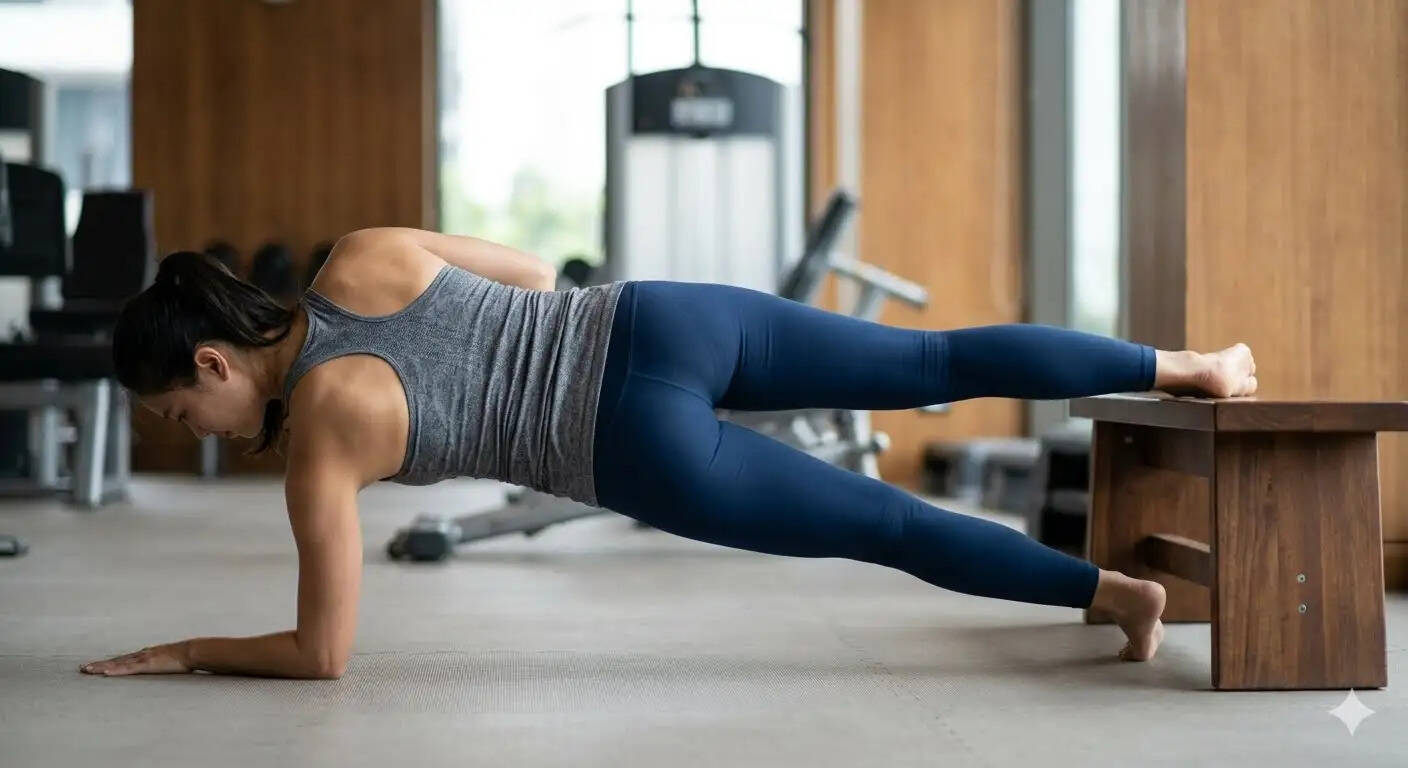
Walk through any gym and you'll see plenty of people training quads, glutes, hamstrings, and abs. Almost no one is training their adductors — the muscles running along the inner thigh — until one gets pulled during a sprint or a sudden change of direction. That gap in most training programs is exactly what the Copenhagen plank was built to close.
Where It Comes From
The exercise takes its name from Copenhagen, Denmark, where it was developed by sports medicine researchers working with FC Copenhagen's soccer team. The goal was straightforward: soccer places enormous strain on the groin through repeated sprinting, kicking, and rapid pivoting, and the adductors — a group of muscles including the adductor longus, adductor brevis, adductor magnus, pectineus, and gracilis — are directly responsible for absorbing much of that load.
Since then, the movement has spread well beyond soccer into general strength training, rehab programs, and prehab routines across sports.
How It's Performed
The Copenhagen plank is a side plank variation with one key twist: instead of resting your legs on the floor, your top leg rests on an elevated surface — typically a bench, box, or chair — while your bottom leg hangs unsupported in the air.
Your body forms a straight line from shoulder to ankle, forearm braced on the floor, top arm extended upward for balance. Because the top leg is doing the work of holding your entire lower body up against gravity, the adductors of that leg are forced into intense, sustained activation throughout the hold.
Beginners typically start with an easier, short-lever version — bending the top knee and resting the shin on the bench rather than the full leg — before progressing to the more demanding long-lever version with the ankle supported, once the movement can be controlled with good form.
What the Research Actually Shows
The Copenhagen plank is genuinely effective at one thing: building adductor strength. A widely cited 2013 study comparing eight different adductor exercises found it produced some of the highest activation levels of the adductor longus of any exercise tested, along with notably high engagement of the core, including the obliques and rectus abdominis. More recent systematic reviews have confirmed the exercise reliably improves both adduction and abduction strength, with particularly strong gains in eccentric strength — the kind of control muscles need while lengthening under load, which is exactly what happens during a sprint's deceleration phase.
Where the evidence gets more complicated is injury prevention. Despite its popularity in professional sports as a groin-injury-prevention tool, recent meta-analyses have found the Copenhagen plank doesn't show a statistically significant reduction in seasonal groin injury rates on its own, even though it clearly builds adductor strength.
Some individual studies have shown a protective benefit, others haven't, and researchers currently describe the overall evidence as mixed and of fairly low certainty. That doesn't mean the exercise is useless for injury prevention — reduced adductor strength has independently been linked to higher groin injury risk in athletes — but it does mean the Copenhagen plank likely works best as one piece of a broader program, alongside adequate sprinting, cutting, and hip-flexor training, rather than as a stand-alone fix.
A Reasonable Way to Start
For general strength purposes, most guidance suggests starting with 2–3 sets of 6–15 repetitions or timed holds, two to three times per week, progressing from the bent-knee version to the full straight-leg version only once form stays controlled throughout. As with any new, demanding movement, easing in gradually matters more than chasing intensity on day one — the adductors are a commonly neglected muscle group precisely because they're easy to overload before they're properly conditioned.
Medical Disclaimer: The information and reference materials contained here are intended solely for the general information of the reader. Patients and consumers should review the information carefully with their professional health care provider. The information is not intended to replace medical advice offered by physicians. You should consult your physician or fitness trainer, before beginning a new diet, nutritional or fitness program. The publisher or its management do not claim responsibility of this information.
