.jpg)
The Rise of Competitive Calisthenics
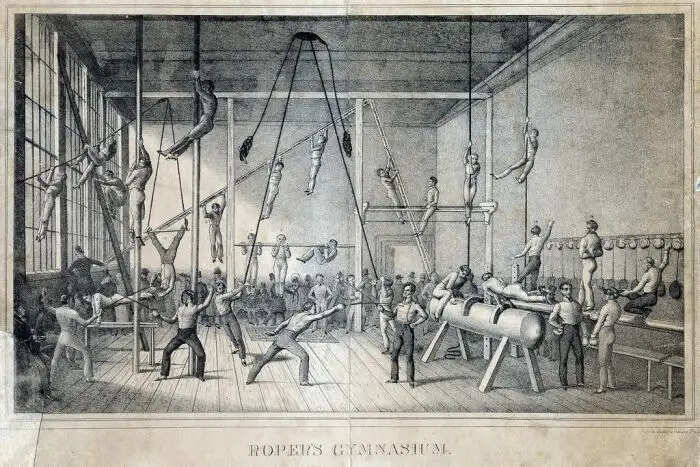
A decade ago, calisthenics meant one thing to most people: pull-ups and push-ups in a school gym. Today, it's a full-blown global sport, complete with world championships, professional athletes, and moves that look closer to gymnastics or breakdancing than a basic fitness routine.
From Park Bars to a Global Sport
Calisthenics as an organized competitive discipline traces back to 2011, when the World Street Workout and Calisthenics Federation (WSWCF) was founded in Riga, Latvia, by a group of athletes looking to bring structure to a sport that had, until then, existed almost entirely in public parks and street workout communities. The federation now organizes multiple annual events, including the Calisthenics World Championship, Confederation Cups, and World Bar Games, uniting national organizations from around the world under one competitive standard.
What started as informal bar sessions between friends has evolved into a codified sport with judging criteria, national federations, and athletes training year-round to compete on an international stage.
What Competitive Calisthenics Actually Looks Like
Unlike casual bodyweight training, competitive calisthenics is judged and scored across defined categories. Freestyle competitions are the most visually dramatic, where athletes perform choreographed routines built from static holds, dynamic movements, and transitions — think human flags, muscle-up combinations, planches, and one-arm holds — while judges score technical execution alongside difficulty and style.
Other formats emphasize raw strength or endurance rather than performance flair, testing how long or how many repetitions an athlete can sustain a specific skill. Some competitions even pit athletes head-to-head in elimination-style battles, where two competitors alternate short bursts of movement in front of a crowd, closer in energy to a dance battle than a traditional strength meet.
Why the Sport Is Growing So Fast
Calisthenics' rise mirrors two much larger shifts in fitness culture: the return of bodyweight training as a legitimate strength discipline, and the explosion of social media as a training showcase. A single well-executed muscle-up or planche hold, filmed in a park, can reach millions of viewers — turning athletes who once trained anonymously into recognizable names with sponsorships and international followings.
The sport's accessibility is part of its appeal too. Unlike many competitive disciplines, calisthenics requires minimal equipment — a set of bars is often enough — which has helped it take root in cities worldwide, from Eastern Europe, where much of its competitive infrastructure originated, to street workout scenes now thriving across Latin America, Southeast Asia, and the Middle East.
Where It's Headed
Organizers have made no secret of their long-term ambition: recognition as an Olympic discipline. Whether or not that happens, the sport's trajectory over the past decade — from unregulated park culture to a codified international competition circuit — suggests calisthenics has already outgrown its reputation as a casual workout trend and is settling in as a legitimate, spectator-worthy sport in its own right.
