
Floating Yoga: How Practising on Water Builds Balance, Strength and Calm
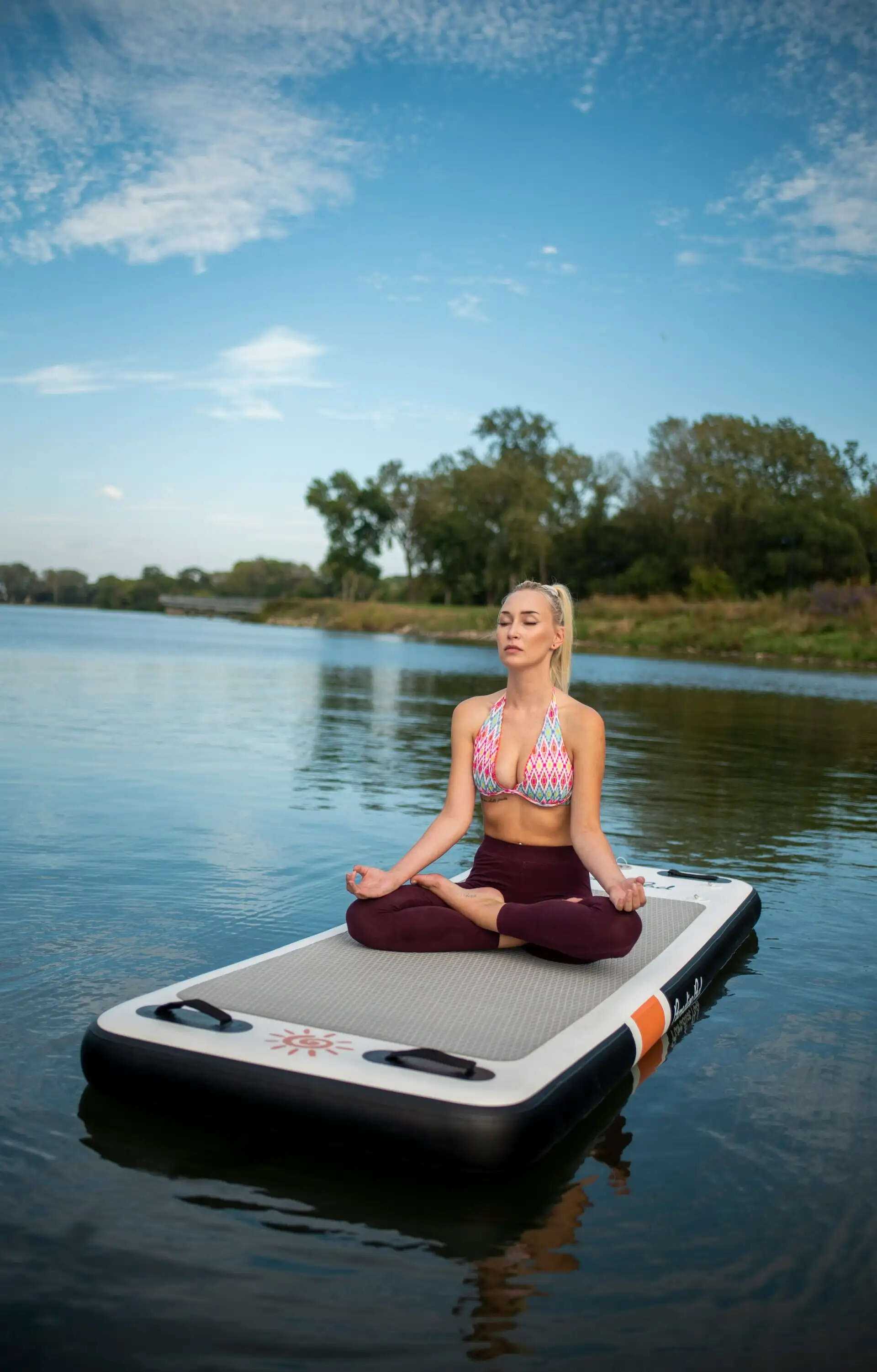
Imagine holding a warrior pose while the surface beneath you gently sways. That’s floating yoga, a fresh twist on an ancient practice that is making a splash in pools, lakes and calm seas around the world.
What Is Floating Yoga?
Floating yoga is yoga performed on a stable, inflatable mat or board that floats on water. Classes usually take place in swimming pools, where the boards are loosely anchored. Outdoors, on lakes or calm coastlines, it is often practised on stand-up paddleboards and called SUP yoga.
The poses are familiar: downward dog, tree pose, warrior and bridge. Doing them on a moving surface changes everything. Even the simplest posture becomes a fresh challenge, and every wobble teaches your body something new.
The Benefits of Floating Yoga
1. Better Balance and Stability
The water constantly shifts beneath you, so your body has to make tiny adjustments to stay steady. Over time, this sharpens your balance and coordination far more than practising on solid ground.
2. A Stronger Core
To stay upright on a floating mat, your deep abdominal and back muscles work non-stop. Many practitioners say a floating session feels like a full core workout, even when the poses look gentle.
3. Gentle on the Joints
The soft, flexible surface absorbs impact, and falling usually means a harmless splash into the water. That makes floating yoga a friendly option for people who want low-impact exercise.
4. Deeper Focus and Mindfulness
On water, you can’t let your mind wander. Staying balanced demands complete attention to your breath and body, which naturally pulls you into the present moment. Many people find it calms a busy mind more easily than a studio class.
5. Stress Relief and Joy
Being near water has a soothing effect on many people. Add sunshine, the gentle rocking of the board and the occasional laugh as someone tumbles in, and floating yoga becomes as much a mood-lifter as a workout.
6. Improved Muscle Awareness
Because the surface is unstable, you quickly notice which muscles are engaged and where your alignment is off. This awareness often improves your regular yoga practice too.
Tips for Beginners
- Know how to swim. Even in shallow pools, basic swimming skills are essential.
- Start with a class. A trained instructor will choose safe poses and anchor the boards properly.
- Keep your gaze steady. Fixing your eyes on one point helps you stay balanced.
- Widen your stance and move slowly between poses.
- Embrace the falls. Slipping into the water is part of the fun.
If you have injuries, balance disorders or health concerns, check with your doctor first.
The Bottom Line
Floating yoga turns a familiar practice into a playful, challenging adventure. It builds balance, strength and focus while giving you a calm escape on the water. If your yoga routine needs a fresh spark, this might be the perfect way to dive in.
Medical Disclaimer: The information and reference materials contained here are intended solely for the general information of the reader. One should consult a qualified trainer and your physician for advice and before beginning a new diet, nutritional or fitness program. The publisher or its management do not claim responsibility of this information.
