
Gen Z Is Ditching Hustle Culture to Live Like Their Grandmother
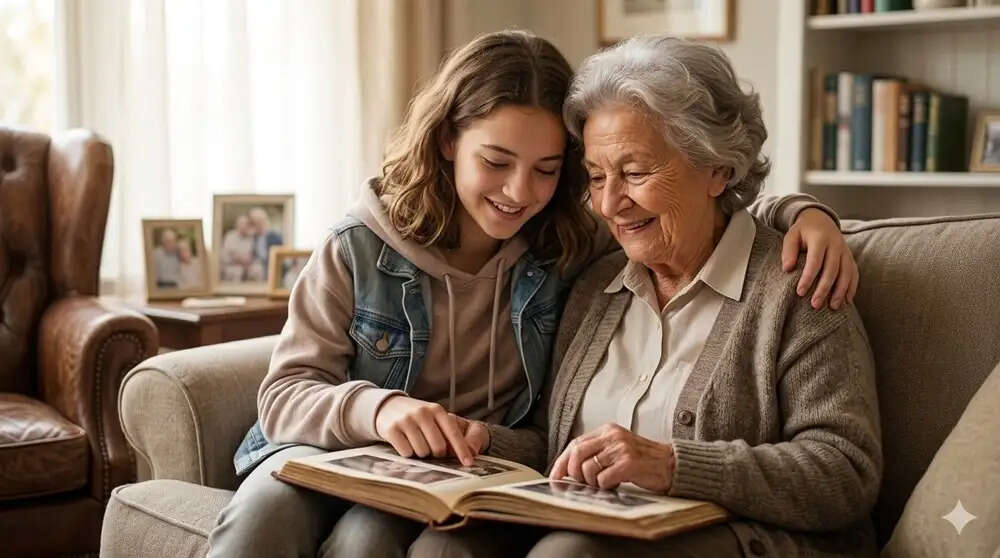
For a generation raised on productivity apps and self-optimization culture, the newest wellness trend asks for the opposite of hustle: cook a slow sauce, take a long walk, put the phone down, and live a little more like an Italian grandmother.
From an Instagram Post to a Viral Movement
The trend traces back to a specific moment. The concept entered wider online consciousness after organic skincare label @tallowtwins shared a carousel post about it to Instagram on February 24, a post that has since gathered more than 54,800 likes and hundreds of comments, framing the sun-soaked "nonna" lifestyle as an antidote to modern American life.
Around the same time, another post on X captured the sentiment that went viral in its own right, contrasting extreme longevity hacking with the image of a 102-year-old Italian nonna eating homemade pasta and enjoying a glass of wine every night, seemingly unbothered by any of it. Google searches for the term reportedly surged 700% within a single week as the idea spread across TikTok and Instagram.
What "Maxxing" Usually Means — and How This Flips It
The "-maxxing" suffix comes from internet optimization culture, where it's been applied to nearly everything: sleep, appearance, physical health, even something as narrow as skincare.
Nonnamaxxing borrows that same language but points it in the opposite direction, applying it to a grandmother's unhurried daily routines, like making sauce, taking walks, and feeding people, turning the optimization format on its head.
What the Trend Actually Looks Like
In practice, nonnamaxxing isn't a rigid system so much as a mood. It generally means leaning into slower, intentional, analog activities that feel grounding and nourishing rather than overstimulating, according to LA-based somatic trauma therapist Chloë Bean.
On TikTok, that translates into a fairly consistent visual language: soft lighting, simple kitchen scenes, and slow-cooked meals, often filmed without narration or urgency, standing in deliberate contrast to the fast-cut, high-stimulation content most social platforms reward.
Why It's Resonating With Gen Z Specifically
The appeal seems tied to a particular kind of fatigue. Psychotherapist Jonathan Alpert has noted that Gen Z has grown up in an environment where nearly every action can be tracked, measured, or optimized, and that constant, low-level evaluation builds up an invisible stress that persists throughout the day.
Nonnamaxxing doesn't try to offer a better system for managing that stress — it offers an exit from the system altogether.
Is There Real Science Behind It?
Unusually for a wellness trend, this one has some genuine evidence behind it. Italy consistently ranks among the world's longest-lived countries, and Sardinia is one of the few regions on Earth classified as a Blue Zone, where people routinely live past 100.
Much of that longevity has been linked less to any single habit and more to a broader lifestyle pattern: regular movement, minimally processed food, and strong community ties — the same behaviors nonnamaxxing is loosely modeled on.
Not Without Its Critics
Not everyone is convinced the trend translates cleanly. Some commentary has pointed out that nonnamaxxing remains aspirational rather than fully representative, glossing over economic realities, regional disparities, and the fact that daily life in Italy isn't actually an endless sequence of sun-drenched lunches.
There's also a built-in irony: a movement about disconnecting from screens is, almost entirely, being discovered, shared, and sustained through social media.
